MLB Betting UK
MLB Betting Rules: The Complete UK Punter’s Guide
 Available in US
- What Every UK Punter Needs to Know Before Placing an MLB Bet
- Why UK MLB Rules Differ From US Sportsbooks
- How Moneyline Betting Works in MLB
- The Run Line: Baseball’s Version of the Spread
- Over/Under (Total Runs): How UK Bookmakers Settle MLB Totals
- Official Game Rule: When Your Bet Counts as Valid
- Listed Pitchers vs Action: What Changed in 2024
- Will my bet stand or be voided?
- What Happens to Your Bet When a Game Is Rained Off
- First 5 Innings (F5) Bets: Rules and Settlement
- Series Betting, Props and Futures: Key UK Rules
- UK Gambling Commission Rules That Affect MLB Bettors
- Pre-Bet Checklist: Before You Place Any MLB Wager
- Your Questions Answered
- Placing MLB Bets With Confidence
Your complete MLB betting rules guide for UK punters
By MLB Wagering Rules Specialist

Nine years in this niche, and the single question I get asked more than anything else is some version of: “What happens to my bet if…” The game gets rained off. The pitcher is swapped twenty minutes before first pitch. The game goes to extras. The season wraps in October and you backed a World Series winner in March. UK punters betting on MLB face a genuinely different set of rules from American bettors. Most of the guides floating around online were written for a US audience, referencing US sportsbooks that operate under entirely different regulatory frameworks.
This guide is written specifically for you, if you are placing baseball bets through a UK-licensed operator, including Sky Bet, Bet365, Betfair, and BetMGM UK. The rules that govern how your stake is treated, when a result is considered official, and when a bookmaker can void your bet are shaped by UK regulation and each operator’s terms. They are not the same rules you will find on a US-facing site.
The UK online sports betting market generated roughly £7.37 billion in revenue in 2024, with participation rates holding steady. Around 48% of UK adults engaged in some form of gambling activity in the twelve months to October 2025 according to Gambling Commission survey data. Baseball is a smaller slice of that picture than football, but it is a growing one, particularly among punters attracted by the sheer volume of daily markets, the depth of the prop bet offering, and the rhythm of a 162-game regular season that runs from late March through October. The demand for clear, accurate, UK-specific rules information has never been higher.
What follows is the most comprehensive breakdown of MLB betting rules available for UK punters: every major market, every void scenario, every regulatory wrinkle. I have organised it so you can read straight through or jump to the section you need right now.
What Every UK Punter Needs to Know Before Placing an MLB Bet
- UK-licensed bookmakers apply their own settlement rules. Not US sportsbook rules. Always check your operator’s specific baseball terms before betting.
- An MLB game becomes “official” after 5 innings (or 4.5 with the home side in front). Games called before that point result in voided bets and returned stakes.
- Around 30% of MLB games finish within a one-run margin, which makes the run line (-1.5/+1.5) a genuinely different proposition from simply backing a winner on the moneyline.
- Since 2024, the industry has largely shifted to “Action” defaults for pitcher selections, so a last-minute starter change no longer voids your bet at most UK operators.
- The Gambling Commission’s financial check threshold dropped to 150 pounds per month in net deposits from February 2025. Large MLB wagers can trigger compliance checks.
Why UK MLB Rules Differ From US Sportsbooks
Here is something that trips up a lot of people who have done their research on baseball betting: nearly every good educational resource out there is written by and for Americans, using American sportsbooks as the reference point. When a US-based guide tells you “action wagers stay live if the pitcher changes,” it is describing a DraftKings or FanDuel policy. That may or may not match what Sky Bet or Bet365 does. And in several important cases, it does not.
The structural difference starts at the regulatory level. In the United States, sports betting is regulated state by state, with a patchwork of different frameworks. In the UK, every licensed operator answers to a single body: the Gambling Commission, established under the Gambling Act 2005. That regulator sets rules around consumer protection, responsible gambling, financial compliance and fair treatment. But it does not dictate specific settlement mechanics for individual sports markets. Those are set by each operator in their own terms and conditions.
What that means for you is a two-layer system. Layer one: Gambling Commission rules that apply to all UK licensed betting. Layer two: operator-specific MLB rules that vary between Sky Bet, Betfair, Bet365, BetMGM UK and others. Getting caught out on layer two is the most common mistake I see UK punters make.
What counts as a “UK bookmaker” for these purposes? Any operator holding a Remote Gambling Licence from the UK Gambling Commission is subject to UK rules when taking bets from UK residents. If a site accepts your UK bank card and GBP deposits, it is operating under UK regulation. These rules apply.
Settlement timing is one practical difference: UK operators typically process withdrawals within 24 to 48 hours, and around 99% of withdrawal requests from major operators are processed in that window per Gambling Commission oversight data. But the bigger practical difference is in how UK operators handle specific MLB scenarios: postponed games, pitcher changes, doubleheaders, extra innings, and shortened games. These are well-documented in US books. UK operator policies are often buried in sports-specific terms that most punters never read.
The Gambling Commission’s chief executive has specifically called out the problem of operators using “regulatory requirements” as a vague cover for what are actually commercial terms, leaving consumers without a clear explanation of why a bet has been settled in a particular way. That opacity is worth working around by reading the terms before you bet. Throughout this guide, I flag where UK and US policies diverge in ways that actually affect your outcomes. The rule of thumb: if you learned a rule from a US source, verify it against your specific operator’s baseball terms before relying on it.
How Moneyline Betting Works in MLB
The moneyline is the foundation of everything. You pick a team to win the game, with no spreads or handicaps. Just: who wins? If your team wins, the bet wins. It sounds like the simplest wager in sport, and in concept it is. The complexity creeps in through the pricing, the void conditions, and what happens in scenarios that fall outside a clean nine-inning result.
In the UK, MLB moneylines are displayed as decimal odds, the same format used for Premier League football. A game where the Yankees are slight favourites might display at 1.80 for the Yankees and 2.10 for their opponents. A ten-pound stake on the Yankees returns eighteen pounds total; the same stake on the underdogs returns twenty-one. The bookmaker’s margin, the vig or juice in American parlance, is built into the spread between those two prices.
Historical data shows that MLB moneyline favourites win between 58% and 62% of games in a typical season. That sounds like it would make favourites the smart side, but the pricing accounts for it. Backing favourites blindly across a season is not profitable once you account for the margin.
Moneyline payout: illustrative example
Odds: Home Team 1.75 / Away Team 2.20. Stake: 20.00 on the Home Team.
If Home Team wins: 20.00 x 1.75 = 35.00 (profit: 15.00)
Stake: 20.00 on the Away Team at 2.20. If Away Team wins: 20.00 x 2.20 = 44.00 (profit: 24.00)
To find implied probability: divide 1 by each decimal price. The two percentages will sum to more than 100%. The excess is the bookmaker’s margin.
Settlement for UK moneylines is straightforward: the winner wins the bet, including any extra innings. A game that goes to extras still settles on the final score. Void scenarios: postponement before the game starts, or a game that does not reach official status (five full innings, or four and a half if the home side is ahead). Once official status is reached and the game is subsequently called, the result stands at that final tally. The dedicated MLB moneyline betting guide covers every edge case in detail.
The Run Line: Baseball’s Version of the Spread
If someone from a football-betting background asks me to explain the run line in one sentence, I say: it is the handicap market, and the handicap is always 1.5 runs. The favourite gives 1.5 runs, meaning they need to win by two or more for the bet to win. The underdog takes 1.5 runs, meaning they can lose by one run and the bet still wins. That fixed 1.5 number is universal in MLB. No bookmaker offers run lines at -2 or +1 as the standard line. The standard is always -1.5/+1.5.
Why does that specific number matter so much? Because of how often MLB games finish within a one-run margin. Per data from Covers.com on recent MLB seasons, around 30% of games finish with exactly a one-run difference between the teams. That is a significant chunk of results where the moneyline winner and the run line winner diverge. Back the favourite on the moneyline and win; back the same team on the run line at -1.5 and lose, because they only won by one. That dynamic creates genuine value differences between the two markets, and it is one reason experienced bettors treat them as genuinely distinct propositions rather than interchangeable.
The one-run reality of MLB
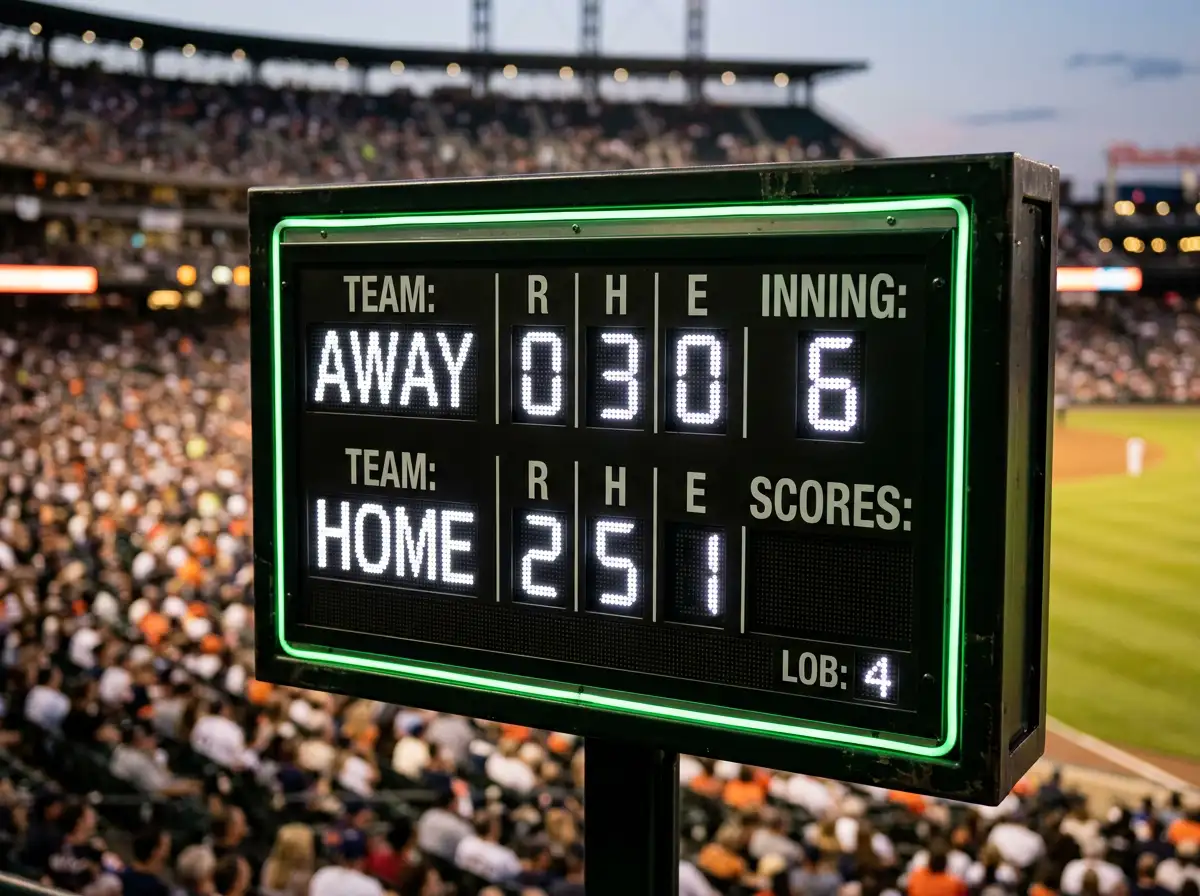
Approximately 30% of all MLB games are decided by a single run. In a 162-game season, that translates to roughly 48 to 50 games per team that finish 1-run games. It is the single most important number in baseball betting because it determines how often the run line and the moneyline produce different outcomes for the same game.
UK bookmakers settle run line bets on the final score including extra innings, unless their specific terms say otherwise, which is rare. So if a favourite wins a game 3-2 in the tenth inning, they have won by one run, and the -1.5 run line bet loses. The extra innings runs count. This is consistent with the way the standard moneyline treats extras, and it is the approach taken by the major UK operators.
Void conditions for run lines follow the same logic as moneylines: if the game does not reach official game status, the bet is voided. One nuance worth noting is that alternate run lines, like buying the favourite down to -0.5 or pushing the underdog out to +2.5, are available at some UK operators but not all. These alternate lines are priced differently and have the same void conditions as the standard line. For everything you need to know about how the -1.5 handicap is priced, when it pays, and how it compares to taking a straight win on the moneyline, the run line betting guide covers it fully.
Over/Under (Total Runs): How UK Bookmakers Settle MLB Totals
The over/under, also called the totals market, is a bet on the combined run total for both teams across the entire game. The bookmaker sets a line (typically somewhere between 7.5 and 10.5 depending on the pitching matchup and weather conditions), and you bet whether the actual combined score goes over or under that number. Simple enough in concept, but the settlement rules introduce several layers of complexity that catch UK punters off-guard.
The first thing to understand is that totals bets in MLB are settled including extra innings at the vast majority of UK operators. If a game is tied 2-2 after nine innings and the teams play an extra three innings before someone wins, every run in those extra frames counts toward the total. The line is typically set with extras already priced in to the probability. It is not a nine-inning-only market unless your operator explicitly says so.
The official game threshold matters enormously for totals bets. When a game is called before reaching the five-inning mark, the total bet is almost always voided. But here is the scenario that creates real confusion: a game that reaches official status and is subsequently called early settles on the result at that moment. If six innings have been played, the total is calculated on the runs scored across those six innings. The over may look like a lock at that point, or the under might have been sitting comfortably, and then the game gets called by rain. The bet settles on those six innings’ worth of runs, which may or may not match what you expected.
| Scenario | Total Runs bet outcome |
|---|---|
| Game reaches 9 innings, final score settles | Settled on final score including any extras |
| Game called after 5 full innings (official) | Settled on score at time of call |
| Game called after 4.5 innings, home team winning | Settled on score – game is official |
| Game called before 5 innings are complete | Voided – stake returned |
| Game postponed before first pitch | Voided – stake returned |
Rain is not the only factor that can shorten a game. Heat delays, power outages at the stadium, and in rare cases security incidents can all lead to a game being suspended. UK bookmaker policies on suspended (as opposed to called/rained-off) games vary slightly. A suspended game that is completed at a later date is typically treated differently from one that is officially called – review the baseball-specific terms of your bookmaker for how they handle that distinction.
There is also the question of the Grand Salami, a multi-game totals market covering all games on a given day, which has its own settlement rules that diverge from standard game-level totals. The dedicated MLB totals betting guide breaks down every scenario including Game Salami, alternate totals, and the specific thresholds that apply at UK operators.
Official Game Rule: When Your Bet Counts as Valid
The “official game rule” is the single most important technical concept in baseball betting, and I am consistently surprised by how few UK punters have heard of it before they run into it. The core principle: an MLB game becomes “official”: results count and bets settle only after a certain number of innings have been played. If the game is called before that threshold, the result is not official and bets are returned as void.
The threshold is five full innings of play, or 4.5 innings when the home team is leading. The four-and-a-half variant exists because of baseball’s structure: if the home team leads after the top of the fifth, they do not bat in the bottom of the fifth. The game is over. That four-and-a-half-inning threshold with the home team winning constitutes a complete game for settlement purposes.
UK bookmakers apply this threshold directly to their settlement policies. Five innings represents a genuinely contested game. Four innings is not enough.
The walk-off scenario: If a game ends in fewer than nine innings via a walk-off, where the home team scores the winning run in their final at-bat, that result is official immediately, provided the game had already passed the five-inning threshold. The official game rule sets the minimum, not the expected duration. A 4-3 win in eight and a half innings stands as a complete result.
Where UK punters sometimes get confused is around the interaction between the official game rule and different market types. The rule applies at the game level. If a game reaches official status after five innings and is then called, all game-level bets settle on the result at the time of the call. Certain segment markets, such as First 5 Innings bets and inning-by-inning markets, have their own settlement logic independent of the full-game threshold.
UK operators use “void” as their standard term for bets that do not stand. If you see “no action” in a US-sourced guide, translate that to “void” in the UK context. They mean the same thing in practice.
In modern split doubleheaders (seven-inning makeup games), some UK operators apply a modified threshold of four innings instead of five. Check your operator’s doubleheader rules before betting these games.
Listed Pitchers vs Action: What Changed in 2024
For most of the history of baseball betting, a bet on a specific game was implicitly a bet on the pitching matchup. If you backed the Dodgers because their ace was starting, and that ace was scratched an hour before first pitch, the conventional approach was to void the bet. The premise of the wager had changed. That was the “listed pitcher” rule, and it was the standard for decades. In 2024, the industry moved on from it, and UK punters using the old framework are operating with outdated information.
The shift to “action” defaults means that at most UK operators, your bet now stands regardless of who pitches. If the starter listed when you placed your bet is scratched, replaced by an emergency callup, or pulled mid-warmup, the bet does not void – it runs with whoever takes the mound. The reasoning behind this change is partly operational (managing void rates on a high-volume market) and partly reflective of how the game has evolved: modern bullpen usage means the concept of a game being fundamentally altered by a single pitcher change is less meaningful than it was in an era of complete-game starters.

What “Action” means for your bet
- Your bet stands regardless of who starts
- Pitcher scratches do not trigger a void or refund
- Late lineup announcements do not affect your position
- The game must still reach official status for the bet to settle
What can still void your bet
- Game postponed before first pitch
- Game called before reaching five-inning official threshold
- Game cancelled entirely with no rescheduled date
- Operator-specific exceptions in their T&Cs
The important caveat: not every UK operator has fully standardised on Action defaults across all market types. Some operators apply Action logic to moneyline and run line markets but retain listed pitcher conditions on certain prop bets, particularly pitcher-specific props like strikeout totals, where the identity of the starting pitcher is integral to the market. Pitcher props are genuinely different from game-outcome markets – if you bet on a specific pitcher to record eight strikeouts and that pitcher never takes the mound, voiding the bet is a reasonable outcome. Most UK operators do void pitcher-specific props if the named pitcher does not start.
The practical upshot of all this: for game-outcome markets (moneyline, run line, totals), assume Action unless your operator’s terms explicitly say otherwise. For pitcher-specific props, assume the bet voids if the named pitcher does not start, unless your operator explicitly says it stands. And if you are placing a bet specifically because of a pitching matchup – you want that ace’s numbers against a weak lineup – review your bookmaker’s listed pitcher policy before you place, because the policy can and does change.
Will my bet stand or be voided?
What Happens to Your Bet When a Game Is Rained Off
Rain delays in MLB are not unusual – the season runs from late March through late October, covering weather conditions in thirty different cities across the US and Canada, many of which see significant spring and summer rain. In my experience, UK punters who are new to baseball betting are regularly caught off-guard when a game they have backed disappears from the settled bets list and ends up in some kind of suspended state. Let me walk through exactly what happens.
The first distinction is between a rain delay and a game that is actually called or postponed. A rain delay means play has paused but the game is expected to resume, either the same day or – in the case of a suspension – at a later date. Your bet does not void just because rain has delayed the start by an hour or interrupted proceedings in the fourth inning. The game is still in progress.
The second distinction is between a game called before it reaches official status and one called after. This is where the five-inning threshold from the previous section becomes critical.

Scenario: Game called by rain in the fourth inning
You have placed a moneyline bet, a run line bet, and an over/under totals bet on a game. The game starts, runs to the end of the fourth inning (four full innings are in the books), and is then called by persistent rain. The home team is losing 3-1.
Official game threshold: Not reached. Five full innings are required (or 4.5 if the home side leads, which does not apply as they trail here).
Result for your bets: All three bets are voided. Stakes returned.
Same scenario, but the game runs through five full innings before being called
Moneyline: Settled on the score at the time of call (3-1, away team wins).
Run line: Settled on the same score – away team wins by 2, so -1.5 on the away team wins; +1.5 on the home team loses.
Over/Under (line was 8.5): Total runs scored = 4. Under wins. Bet settled.
The trickier scenario is a suspended game – one that is not called but paused and rescheduled to be completed at a later date. UK bookmaker policies on suspended games are less standardised than on called games. Some operators void all pre-match bets on a suspended game and treat the resumed portion as a new event. Others carry the bet over to the conclusion. This is one area where checking your operator’s specific baseball terms is non-negotiable – Sky Bet, Bet365, and Betfair do not all handle it the same way.
If you are betting a game that carries meaningful weather risk – a late-afternoon game in a city prone to thunderstorms, or a cold late-season evening – know your operator’s suspension policy before the bet goes down.
First 5 Innings (F5) Bets: Rules and Settlement
The First 5 Innings bet, universally called the F5, exists because baseball bettors wanted a way to isolate the pitching matchup from bullpen decisions. If you have conviction about a starting pitcher’s ability to dominate for the first few innings, but you are nervous about how the bullpen might perform in the sixth, seventh, and eighth, the F5 lets you bet just the part of the game you have a view on. It is one of the most used markets among serious baseball bettors, and UK operators have broadly made it available.
Settlement for the F5 moneyline works like this: after five innings of play, whoever is leading wins the F5 bet. If the score is tied after five innings, the F5 moneyline is typically settled as a void (push) and stakes returned – ties are not outcomes in F5 betting. The F5 total works similarly: the over or under is assessed on the runs scored in the first five innings only, not the full game.
The bottom of the fifth inning trap: The F5 bet settles after five complete innings – meaning both the top half (visiting team batting) and the bottom half (home team batting) of the fifth inning must be played. If the home team is winning after the top of the fifth, the bottom of the fifth is not played (the home team does not need to bat). Does the F5 settle at that point? At most UK operators, yes – the fifth inning is considered complete once the visiting team has made three outs in the top half, provided the home team does not need to bat to determine the F5 result. But check your specific operator’s wording, because this edge case is handled differently by different bookmakers.
Void conditions for F5 bets are more restrictive than for full-game bets in one important sense: the full five innings must be played. If a game is called by rain after four innings, a full-game bet might still have a settlement path (if five innings had been reached). An F5 bet needs all five innings played to have a result. Most UK operators void the F5 if the five-inning mark is not reached cleanly.
The F5 market is genuinely useful as a way to manage the variance of bullpen performance – a starting pitcher who gives up three runs in the first five innings against a vulnerable lineup is a different proposition from that same pitcher being bailed out or blown up by relievers. If you are betting baseball seriously, the F5 deserves a place in your toolkit. The dedicated F5 betting guide goes into the full detail of how these markets work at UK bookmakers.
Series Betting, Props and Futures: Key UK Rules
Beyond the core game markets, MLB offers a depth of betting options that can keep an engaged punter occupied across every day of a 162-game season. The three categories I want to cover here – series betting, player props, and futures/outrights – all have their own distinct rule frameworks that are worth understanding before you put money down.
Series Betting
A series bet covers the outcome of a multi-game series, typically a three-game regular season set. You are betting on which team wins the majority of games in the series. If one game is postponed, UK bookmakers typically still settle based on the games played – provided enough were completed to determine a winner. A 2-1 result settles normally; if only one game of three is played, a void may result depending on operator policy.
Player Props
Player props cover individual performance: home runs, total bases, strikeouts, hits, RBIs. The cornerstone rule at UK operators is the participation requirement – the player must take at least one official at-bat (batters) or throw at least one pitch (pitchers) for the prop to stand. If a player is scratched and never participates, the prop voids. Per 2024 MLB betting analysis, two-leg same-game parlay combinations accounted for around 32% of all Bet Builders placed.
Futures and Outrights
Outright bets on the World Series winner, pennant winners, division titles, and awards (Cy Young, MVP) settle at the end of the season or postseason. Cash-out is available across most major bookmakers, though early-settlement prices can be significantly worse than fair value. Award markets may use dead heat rules if the outcome is very close, splitting returns between selections.
Same-Game Parlay (Bet Builder)
Same-game parlays combine multiple selections from a single game. UK operators typically restrict correlated combinations – you cannot bet the same outcome twice in different ways. If one leg is voided (a player scratched), the bet usually reduces to the remaining legs rather than voiding entirely, but this varies by operator.
One note on playoff and postseason betting: UK operators generally open markets for each playoff series once the participants are confirmed. The void and suspension rules that apply during the regular season apply equally in the postseason, with one additional complication – playoff games are more likely to be scheduled flexibly, with postponements and series completion dates shifting. If you have an outright bet running into the postseason, track the actual schedule rather than assuming games will run on the originally published dates.
For detailed rules on player participation requirements, how UK operators handle scratched players in prop bets, and the specific mechanics of same-game parlays, the MLB prop bets guide covers all of it.
UK Gambling Commission Rules That Affect MLB Bettors
Most guides either skip regulation entirely or mention the Gambling Act 2005 as a footnote without explaining what it means for a UK punter betting on baseball. Several regulatory changes that have come into force between 2024 and 2026 directly affect the MLB betting experience, and they are worth knowing.
The UK online betting market’s gross gambling yield reached 16.8 billion pounds in 2024 to 2025, with online betting accounting for 46% of the total. That scale brings sustained regulatory scrutiny, and the Commission has been implementing White Paper reforms since 2023.
The change that affects the most MLB bettors is the financial check regime. From February 2025, UK licensed operators must conduct enhanced checks when a customer’s net deposits exceed 150 pounds in a calendar month, down from the 500-pound threshold introduced in August 2024. Net deposits means deposits minus withdrawals. For a punter placing meaningful stakes across a full MLB week, reaching 150 pounds in monthly net deposits is not difficult. The operator may ask for income evidence – payslips, bank statements – and may temporarily restrict access while checks are completed. The Gambling Commission has been explicit that operators need to communicate clearly about why these checks are happening rather than hiding behind vague “regulatory requirements” language – a problem the Commission’s leadership has specifically called out.

The Gambling Levy Regulations that took effect in April 2025 require operators to pay between 0.1% and 1.1% of their gross gambling yield into a research, education, and treatment fund. This does not change how bets settle, but it is part of the broader regulatory environment shaping how operators design their products and terms in 2026.
From May 2025, operators can only send direct marketing to customers who have explicitly consented by product type and communication channel. Promotional offers and free bet activity are therefore more restricted than in previous years. And for punters winning consistently on MLB markets, the Commission’s 2025 LCCP guidance on commercial restrictions means operators must provide a clear explanation if they restrict your account – and you have recourse through the Independent Betting Adjudication Service if that explanation is not satisfactory.
The regulatory framework is there to work in your favour. It works best when you know the rules as well as the bookmaker does – including these newer obligations that operators do not always volunteer upfront.
Pre-Bet Checklist: Before You Place Any MLB Wager
Over the years I have developed a mental checklist I run through before placing any MLB bet. These are not abstract risk management principles – they are specific checks that have saved me from voided bets, mispriced stakes, and unpleasant surprises at settlement time. Here it is, formalised.
Before placing an MLB bet, confirm the following:
- Check the weather forecast for the stadium city. If there is a significant rain probability for the game window, know your operator’s policy on suspended games before committing.
- Verify the starting pitcher announcement. If pitchers have not been officially announced and you are betting specifically on a matchup, know whether your operator defaults to Action (bet stands regardless) or has any listed pitcher conditions remaining on that market type.
- For player prop bets, confirm the player is in the line-up or at minimum expected to start. A player listed as “day-to-day” on the injury report is a scratch risk.
- For same-game parlays, check which leg combinations your operator restricts. Some correlated combinations are not permitted, and finding this out after placing the bet is frustrating.
- Know the official game threshold for your market type. Standard games: 5 innings (4.5 when the visiting team has made their outs and the home side holds the lead). Seven-inning doubleheader games: check your operator’s specific policy.
- If you are within 150 pounds of your monthly net deposit threshold, be prepared for a possible financial check from your operator. Have documentation available if needed.
- Check the game start time in UK time – MLB games start significantly later than most UK punters expect if they are not used to the time difference, and in-play opportunities open up in the middle of the UK night.
One additional point on timing: UK operators post odds on MLB games well before first pitch – sometimes 24 to 48 hours in advance. Early lines often carry more margin (worse value for the bettor) as the bookmaker has less information about pitching confirmed, weather, and line-up details. I generally wait for confirmed pitching announcements and a closer look at the weather before committing to a bet, unless the early line is obviously mispriced.
Your Questions Answered
What happens to my MLB bet if the game is postponed or cancelled?
When a game is postponed before it starts, all pre-match bets are voided and stakes returned at virtually all UK operators. If the game starts but is called before reaching official status (five complete innings, or 4.5 with the home team ahead), bets are voided. Once official status is reached, bets settle on the result at the time of the call. Cancelled games with no rescheduled date are always voided. Suspended games – paused and completed later – vary by operator, so review your bookmaker’s baseball terms.
How does the run line differ from the moneyline in baseball betting?
The moneyline is a straight-win market. The run line is a handicap: the favourite gives 1.5 runs and must win by two or more; the underdog takes 1.5 and can lose by one. Around 30% of MLB games finish within a one-run margin, which means the two markets regularly produce different outcomes for the same game. The run line typically offers better odds on the favourite (the winning condition is harder) and worse odds on the underdog (the losing condition is more forgiving).
What does “Action” mean instead of “Listed Pitcher” on a baseball bet?
“Action” means the bet runs regardless of which pitchers start. A last-minute starter change does not void your bet – whoever pitches, the result stands. “Listed Pitcher” was the older default: if either starting pitcher was replaced before throwing a pitch, the bet voided. Since 2024, most UK operators have moved to Action as the default for game-outcome markets. Pitcher-specific props (strikeout totals for a named pitcher) still typically void if the named pitcher does not start.
When is an over/under bet on MLB considered official?
A full-game over/under requires the game to reach official status: five complete innings (four and a half when the home side bats last and holds a lead). Games called before that threshold see the total voided. If it reaches official status and is then called, the total is assessed on all runs scored up to that point. Extra innings count toward the total if the game goes to extras.
How do First 5 Innings bets work and why do UK punters use them?
An F5 bet settles on the score after five complete innings. UK punters use F5 markets primarily to isolate the starting pitcher matchup from bullpen variance – strong conviction about an early pitching edge without the late-game uncertainty. The key rule: all five innings must be completed for F5 bets to settle. If a game is called short of five innings, F5 bets are voided.
What is the Grand Salami in MLB betting?
The Grand Salami is a combined over/under covering all MLB games on a given day. You bet on the total runs across every game on the slate. UK bookmakers typically void the Grand Salami if any game on the slate is postponed, because the total is calculated assuming all listed games are played. Always check the day’s full schedule before placing one.
Does a rain delay or shortened game affect my bet with a UK bookmaker?
A delay that does not shorten the game has no effect. If rain forces the game to be called before five innings are completed, pre-match bets are voided. Once five or more innings are complete before the call, bets settle on the tally at that moment. Suspended games (paused and rescheduled to complete later) are handled differently by different UK operators – some void pre-match bets, others carry them forward.
Placing MLB Bets With Confidence
The most important thing I want you to take away from this guide is not a single rule – it is the habit of checking before you bet rather than after. The rules that govern your MLB wagers at a UK bookmaker are not hidden. They are in the sports-specific terms, the general betting rules, and the void conditions section of every licensed operator’s site. They are just rarely read.
After nine years covering this niche, I can tell you that the majority of avoidable losses – not losing bets, but genuinely avoidable disappointments like a voided same-game parlay or a prop that could not settle – come from punters who assumed the rules match what they read on a US-facing site, or who placed a bet without considering weather, pitcher announcements, or the five-inning official game threshold.
The UK regulatory framework – Gambling Commission oversight, the consumer protections in the LCCP, the right to a clear explanation when a bet is settled in a way you did not expect – is genuinely among the strongest in the world. The goal of reform, as the government framed it, is to ensure consumers have freedom and choice while being protected from harm. That framework is there to work for you. But it works best when you know the rules as well as the bookmaker does.
The five core markets (moneyline, run line, over/under, void rules, and prop bets) each have their own dedicated guides on this site. If you have questions about a specific market or scenario, that is where to go next. This pillar is the foundation; the cluster guides are where the detail lives.
MLB runs 162 games per team across seven months, with playoff baseball extending into late October. There is no shortage of opportunity – the edge belongs to punters who understand the rules of the game they are actually playing.
Created by the ”mlb Betting Rules” editorial team.